Message From the Pastor
Message From the Pastor
Dear Parishioners,
Dear Parishioners,
As we approach the end of the liturgical year, the Church invites us to reflect on our lives and consider how faithfully we have used the gifts God has entrusted to us. This Sunday’s Gospel (Matthew 25:14–30) presents us with the parable of the talents.
In this parable, a master entrusts his servants with different amounts of money before leaving on a journey. Two of them put their talents to work and multiply what they received. However, the third servant, out of fear, buries his talent in the ground and returns it without gaining anything.
This Gospel reminds us that everything we have is a gift from God: our time, talents, faith, opportunities, and material resources. God does not expect everyone to accomplish the same things, but He does expect each of us to be faithful with what we have received.
Sometimes we may be tempted to bury our talents. We may think that we are not good enough, that we have too little to offer, or that someone else can do the work better. But God calls each of us to participate in building His Kingdom. Every prayer, every act of kindness, every sacrifice, and every effort to serve others matters.
I would also like to take this opportunity to say a heartfelt thank you to all of you who generously share your time, gifts, and talents with our parish family. I am truly grateful for each one of you. Whether you serve as lectors, teach our children in the PSR program, help at the altar as servers, welcome people as ushers, serve as extraordinary ministers of Holy Communion, sing in our choir, take care of the altar linens, maintain our gardens and church grounds, or volunteer in countless other ways, please know how much your service means to me and to our parish. Every contribution, no matter how big or small, makes a difference. What makes our parish special is not simply our beautiful church, but the people who give their hearts, time, and energy to make it a living community of faith. I am blessed to serve as your pastor, and I thank God for each of you. May He reward your generosity and continue to bless you for all that you do.
As the liturgical year draws to a close, this is a good opportunity to ask ourselves: What have I done with the gifts God has given me? Have I used them to serve Him and others, or have I buried them out of fear, comfort, or indifference?
Let us remember that one day we will stand before the Lord and give an account of how we have lived. May we be able to hear those beautiful words: “Well done, my good and faithful servant.”
Let us not be afraid to use our gifts. Let us serve God generously, faithfully, and joyfully while we still have time.
Thank you for your faithful presence, your prayers, your generosity, and for the many ways you help build our parish family. Please know that I remember you and your loved ones in my prayers every day.
May the Lord bless you and your families abundantly, and may our Blessed Mother wrap you in her loving care and lead you always closer to her Son, Jesus Christ.
Fr. Michal
The Introductory Rites of the Holy Mass
The Introductory Rites are the opening part of the Holy Mass. Their purpose is to gather the faithful together, unite them as one community, and prepare their hearts to celebrate the Eucharist.
The Mass does not begin simply when the priest starts speaking. From the very beginning, through the procession, the entrance chant, and the opening prayers, the Church reminds us that we are entering into something sacred: the celebration of the mystery of our salvation.
1. The Entrance Procession
The Mass begins with the entrance procession. It is not simply a practical way of getting the priest and altar servers into the sanctuary. It is a sign of the Church journeying together toward the Lord.
The procession usually follows this order:
The procession reminds us that we are a pilgrim people. We are not simply attending a religious gathering; we are coming together to worship God and encounter Jesus Christ.
2. The Entrance Chant
As the procession begins, the entrance chant or hymn is sung.
The purpose of this chant is to:
3. The Kissing of the Altar
When the priest reaches the sanctuary, he approaches the altar and venerates it with a kiss. If a deacon is present, he also venerates the altar.
Why does the priest kiss the altar?
The altar is one of the most important symbols in the church. It represents Christ himself, who is both the Priest and the Victim of the sacrifice offered in the Eucharist.
The altar is also the place upon which the Eucharistic Sacrifice will be celebrated.
The priest kisses the altar as a sign of love, reverence, and devotion to Christ. It is also an ancient liturgical tradition of the Church.
We should remember that the altar is not simply a table. It is the sacred place where the sacrifice of Christ is made sacramentally present.
4. The Incensation of the Altar
If incense is used, the priest may incense the cross and the altar.
Incense has a beautiful biblical meaning. In the Scriptures, incense is associated with prayer rising toward God.
Psalm 141:2 says:
"Let my prayer be counted as incense before you."
Incense also expresses reverence for what is holy. During Mass, the altar, the cross, the Gospel, the priest, and the congregation may be incensed at different moments.
When we see the smoke rising, it reminds us that our prayers should also rise toward heaven.
5. The Greeting: "The Lord Be with You"
After the priest venerates the altar and goes to the chair, he makes the Sign of the Cross with the congregation and greets the people:
"The Lord be with you."
The congregation responds:
"And with your spirit."
This is not simply a polite greeting, like saying good morning.
It is a deeply biblical and spiritual expression. The priest reminds the faithful that God is present among them. The words also recognize the particular grace of the Holy Spirit received by the priest through his ordination.
When the people respond, "And with your spirit," they pray that the Lord will be with the priest in his sacred ministry.
It is a beautiful exchange of prayer between the priest and the congregation.
6. The Gloria
After the greeting, on certain occasions, we sing or recite the Gloria.
The Gloria begins with the words:
"Glory to God in the highest, and on earth peace to people of good will."
These words come from the announcement of the angels at the birth of Jesus in Bethlehem (Luke 2:14).
The Gloria is an ancient hymn of praise. It is not a prayer of petition, in which we primarily ask God for something. Rather, it is a prayer of adoration and thanksgiving. We praise God the Father, Jesus Christ, and the Holy Spirit.
When do we sing the Gloria?
The Gloria is sung or recited:
The Gloria is normally omitted:
7. The Opening Prayer (Collect)
After the Gloria, when it is prescribed, or immediately after the greeting when the Gloria is omitted, the priest invites everyone to pray:
"Let us pray."
The priest then pauses briefly, giving everyone a moment of silence to bring their personal intentions before God.
After this silence, the priest says the opening prayer, also called the Collect.
Why is it called the Collect?
Because it gathers together all the prayers, intentions, and needs of the congregation into one prayer, which the priest offers to God on behalf of everyone.
The Collect usually has four elements:
"Amen."
This means, "So be it," or "I believe." We make the prayer of the priest our own.
Conclusion
The Introductory Rites are much more important than we sometimes realize. They prepare us spiritually for what is about to happen.
We enter the church, follow the cross, sing together, honor the altar, greet one another in Christ, praise God, and unite our intentions in prayer.
All of this prepares us for the Liturgy of the Word and, ultimately, for the most important moment of the Mass: the Liturgy of the Eucharist, when Christ becomes truly present on the altar under the appearances of bread and wine.
The Mass is not simply something we watch. It is a sacred mystery in which we are invited to participate with our whole hearts
The Introductory Rites are the opening part of the Holy Mass. Their purpose is to gather the faithful together, unite them as one community, and prepare their hearts to celebrate the Eucharist.
The Mass does not begin simply when the priest starts speaking. From the very beginning, through the procession, the entrance chant, and the opening prayers, the Church reminds us that we are entering into something sacred: the celebration of the mystery of our salvation.
1. The Entrance Procession
The Mass begins with the entrance procession. It is not simply a practical way of getting the priest and altar servers into the sanctuary. It is a sign of the Church journeying together toward the Lord.
The procession usually follows this order:
- The incense bearer (thurifer) – carrying the thurible with burning incense.
- The candle bearers (acolytes) – carrying candles, symbolizing Christ, the Light of the World.
- The cross bearer – carrying the processional cross, reminding us that Christ is at the center of everything we celebrate.
- Other altar servers – walking in procession.
- The deacon, if present.
- The priest, who is the celebrant of the Mass.
- The bishop, if he is celebrating the Mass.
The procession reminds us that we are a pilgrim people. We are not simply attending a religious gathering; we are coming together to worship God and encounter Jesus Christ.
2. The Entrance Chant
As the procession begins, the entrance chant or hymn is sung.
The purpose of this chant is to:
- Open the celebration.
- Unite the congregation in prayer and song.
- Introduce the mystery or theme of the liturgical celebration.
- Accompany the procession of the priest and ministers.
3. The Kissing of the Altar
When the priest reaches the sanctuary, he approaches the altar and venerates it with a kiss. If a deacon is present, he also venerates the altar.
Why does the priest kiss the altar?
The altar is one of the most important symbols in the church. It represents Christ himself, who is both the Priest and the Victim of the sacrifice offered in the Eucharist.
The altar is also the place upon which the Eucharistic Sacrifice will be celebrated.
The priest kisses the altar as a sign of love, reverence, and devotion to Christ. It is also an ancient liturgical tradition of the Church.
We should remember that the altar is not simply a table. It is the sacred place where the sacrifice of Christ is made sacramentally present.
4. The Incensation of the Altar
If incense is used, the priest may incense the cross and the altar.
Incense has a beautiful biblical meaning. In the Scriptures, incense is associated with prayer rising toward God.
Psalm 141:2 says:
"Let my prayer be counted as incense before you."
Incense also expresses reverence for what is holy. During Mass, the altar, the cross, the Gospel, the priest, and the congregation may be incensed at different moments.
When we see the smoke rising, it reminds us that our prayers should also rise toward heaven.
5. The Greeting: "The Lord Be with You"
After the priest venerates the altar and goes to the chair, he makes the Sign of the Cross with the congregation and greets the people:
"The Lord be with you."
The congregation responds:
"And with your spirit."
This is not simply a polite greeting, like saying good morning.
It is a deeply biblical and spiritual expression. The priest reminds the faithful that God is present among them. The words also recognize the particular grace of the Holy Spirit received by the priest through his ordination.
When the people respond, "And with your spirit," they pray that the Lord will be with the priest in his sacred ministry.
It is a beautiful exchange of prayer between the priest and the congregation.
6. The Gloria
After the greeting, on certain occasions, we sing or recite the Gloria.
The Gloria begins with the words:
"Glory to God in the highest, and on earth peace to people of good will."
These words come from the announcement of the angels at the birth of Jesus in Bethlehem (Luke 2:14).
The Gloria is an ancient hymn of praise. It is not a prayer of petition, in which we primarily ask God for something. Rather, it is a prayer of adoration and thanksgiving. We praise God the Father, Jesus Christ, and the Holy Spirit.
When do we sing the Gloria?
The Gloria is sung or recited:
- On Sundays outside Advent and Lent.
- On solemnities.
- On feasts.
- During other particularly solemn celebrations when prescribed by the liturgy.
The Gloria is normally omitted:
- During Advent, because we are waiting and preparing for the coming of Christ.
- During Lent, because it is a penitential season focused on conversion, repentance, and preparation for Easter.
- On ordinary weekdays when it is not prescribed.
7. The Opening Prayer (Collect)
After the Gloria, when it is prescribed, or immediately after the greeting when the Gloria is omitted, the priest invites everyone to pray:
"Let us pray."
The priest then pauses briefly, giving everyone a moment of silence to bring their personal intentions before God.
After this silence, the priest says the opening prayer, also called the Collect.
Why is it called the Collect?
Because it gathers together all the prayers, intentions, and needs of the congregation into one prayer, which the priest offers to God on behalf of everyone.
The Collect usually has four elements:
- An address to God.
- A reference to something God has done or to one of His attributes.
- A petition asking for a particular grace.
- A conclusion through Jesus Christ.
"Amen."
This means, "So be it," or "I believe." We make the prayer of the priest our own.
Conclusion
The Introductory Rites are much more important than we sometimes realize. They prepare us spiritually for what is about to happen.
We enter the church, follow the cross, sing together, honor the altar, greet one another in Christ, praise God, and unite our intentions in prayer.
All of this prepares us for the Liturgy of the Word and, ultimately, for the most important moment of the Mass: the Liturgy of the Eucharist, when Christ becomes truly present on the altar under the appearances of bread and wine.
The Mass is not simply something we watch. It is a sacred mystery in which we are invited to participate with our whole hearts

The Pushpay giving system is now active at Saint Christopher Parish!
Please consider using this system to make a new contribution to the parish. You have full control over the amount and frequency and can make changes at any time, as well as being able to download your year-end giving statement.
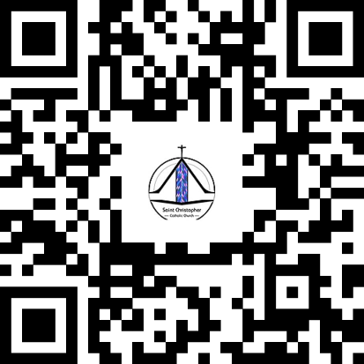
The new system is very easy to use, and you are encouraged to try it by scanning the code here or in any of the pews in the church. The system is also active if you want to use it for candle donations.
If you are currently setup to give electronically to St Christopher, you will be receiving emails over the next few weeks to begin the transition to Pushpay. These are not scams! Since the current provider will no longer be used, it will be necessary to transition in the coming weeks. If you need help and would like someone to walk you through the process, please contact Andrew Oberhammer in the Church Office at 614-754-8888..

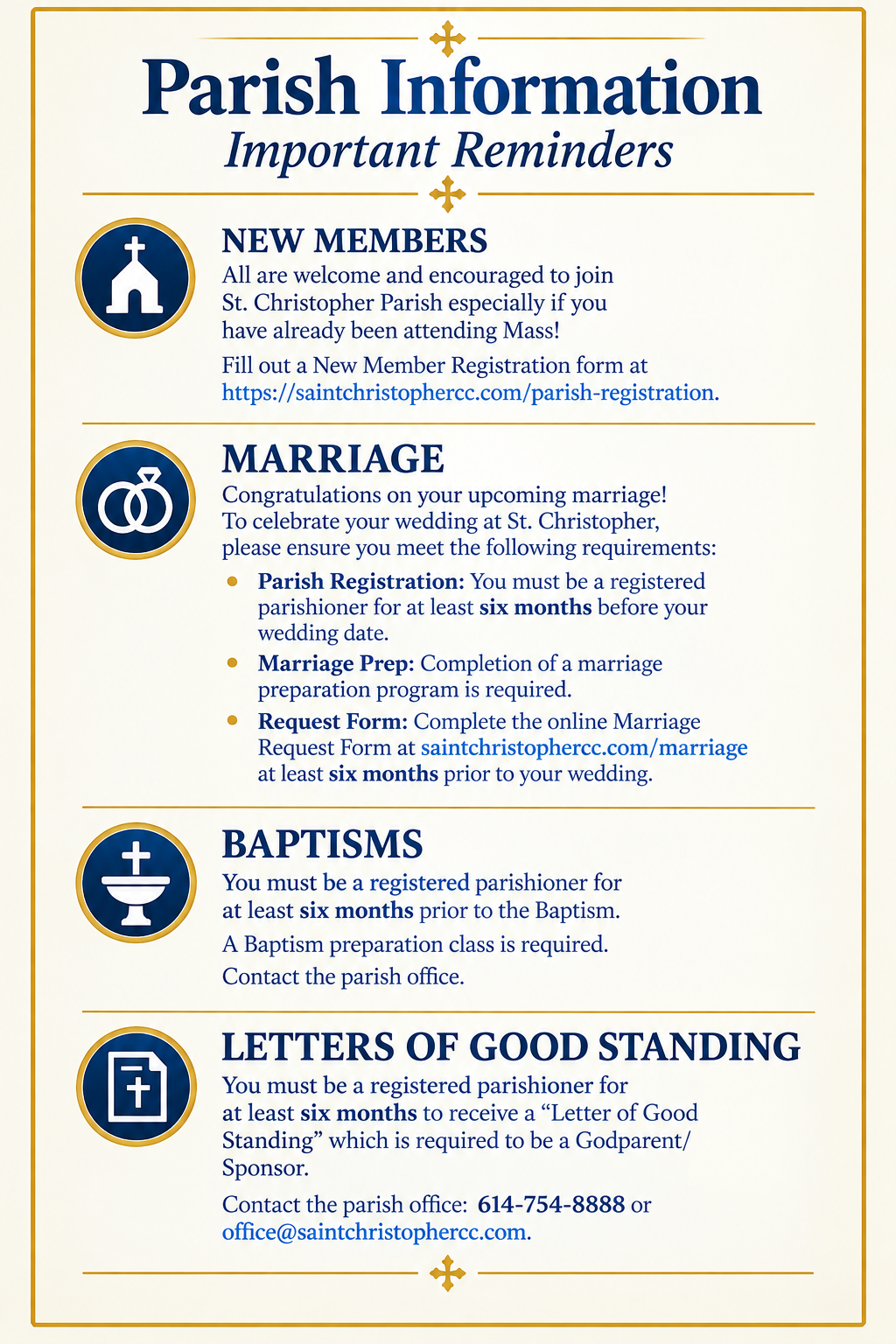
Baptism Class: Monday, November 23rd at 6pm
If you would like to have your child baptized, please mark your calendars for the next baptism class on Monday, November 23rd at 6pm in the main church. After attending the class, you may schedule your child’s baptism by emailing office@saintchristophercc.com
If you would like to have your child baptized, please mark your calendars for the next baptism class on Monday, November 23rd at 6pm in the main church. After attending the class, you may schedule your child’s baptism by emailing office@saintchristophercc.com

POLSKI KĄCIK – OGŁOSZENIA/ POLISH CORNER: ANNOUNCEMENTS
Chór Diakonia zaprasza!/Diakonia Choir Welcomes New Members!
Chór śpiewający podczas polskich Mszy Świętych w niedziele przypadające na nieparzyste daty miesiąca zaprasza do wspólnej posługi muzycznej. Próby odbywają się w piątki przypadające na nieparzyste daty miesiąca. Kontakt: rempus@twc.com.
Chór śpiewający podczas polskich Mszy Świętych w niedziele przypadające na nieparzyste daty miesiąca zaprasza do wspólnej posługi muzycznej. Próby odbywają się w piątki przypadające na nieparzyste daty miesiąca. Kontakt: rempus@twc.com.
Join the Diakonia Choir! We sing at Polish-language Masses on Sundays that fall on odd-numbered days of the month (1st, 3rd, 5th, etc.). Rehearsals are on Fridays that are also odd-numbered days. Everyone is welcome! For more information, contact rempus@twc.com.
UWAGA, CZŁONKOWIE Polish American Club of Columbus!/ PAC Constitution Discussion
Zapraszamy na ostatnią dyskusję nad zmianami w Konstytucji PAC, 11 listopada o godz. 19:00
na Zoomie. Spotkanie będzie dwujęzyczne (polski i angielski). Szczegóły i link do spotkania
przesłano e-mailem.
Zapraszamy na ostatnią dyskusję nad zmianami w Konstytucji PAC, 11 listopada o godz. 19:00
na Zoomie. Spotkanie będzie dwujęzyczne (polski i angielski). Szczegóły i link do spotkania
przesłano e-mailem.
PAC members are invited to the final bilingual discussion in Polish and English about the proposed PAC Constitution changes on November 11 at 7:00 PM on Zoom. Please check your email for the invitation and meeting link.
Zaproszenie na Wigilię - Polish Christmas Celebration
Polish American Club (PAC) of Columbus serdecznie zaprasza członków i sympatyków na
Wieczór Wigilijny, 12 grudnia o godz. 17:30, w Amelita Mirolo Barn, Sunny 95 Park w
Upper Arlington. Zapraszamy do wspólnego świętowania! Szczegóły na platformach społecznościowych.
Polish American Club (PAC) of Columbus serdecznie zaprasza członków i sympatyków na
Wieczór Wigilijny, 12 grudnia o godz. 17:30, w Amelita Mirolo Barn, Sunny 95 Park w
Upper Arlington. Zapraszamy do wspólnego świętowania! Szczegóły na platformach społecznościowych.
PAC of Columbus invites members and friends to celebrate Wigilia on December 12 at 5:30 PM at Amelita Mirolo Barn in Sunny 95 Park, Upper Arlington. For more information, visit:
Website : https://poloniacolumbus.org
Instagram: https://www.instagram.com/pac_columbusohio/
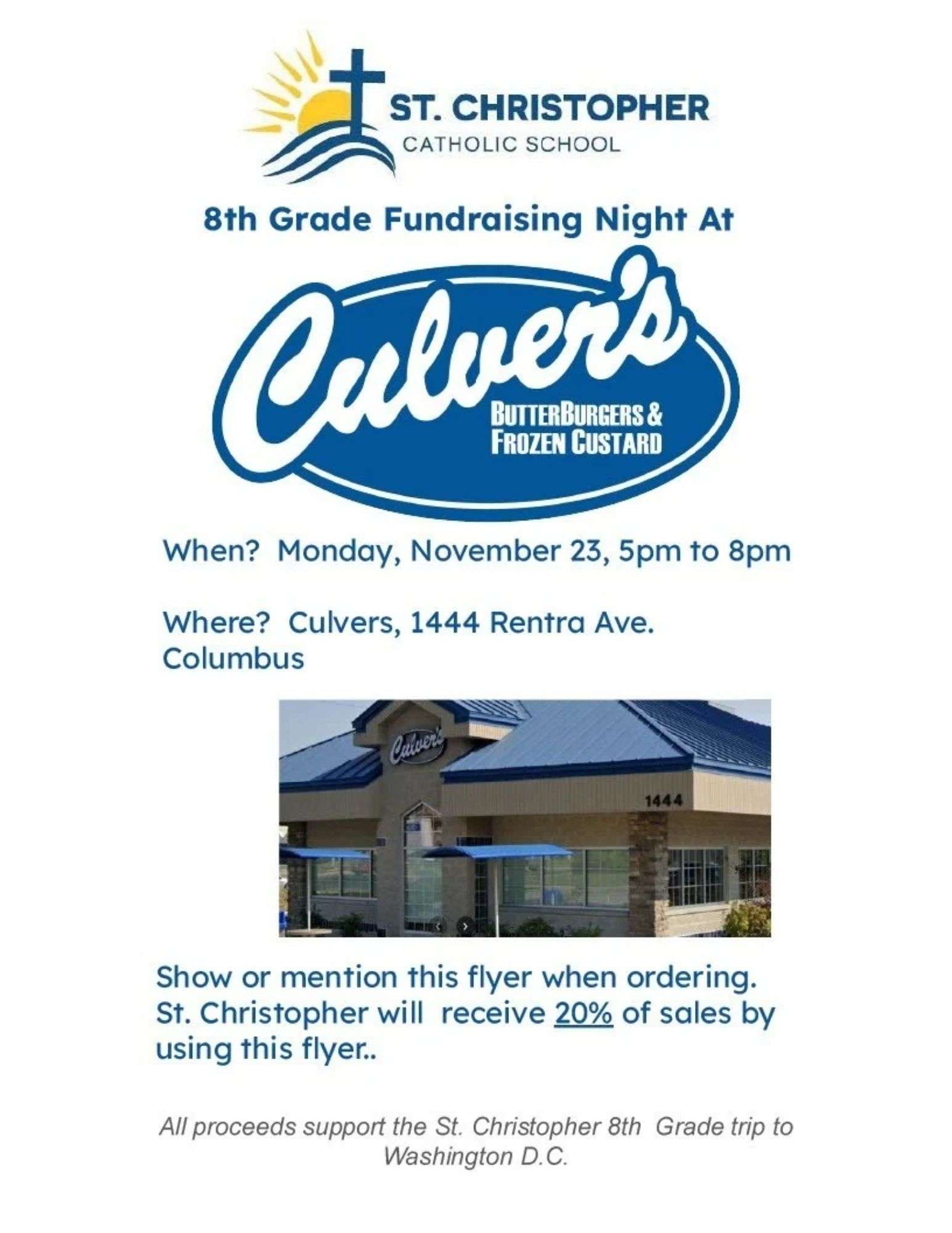
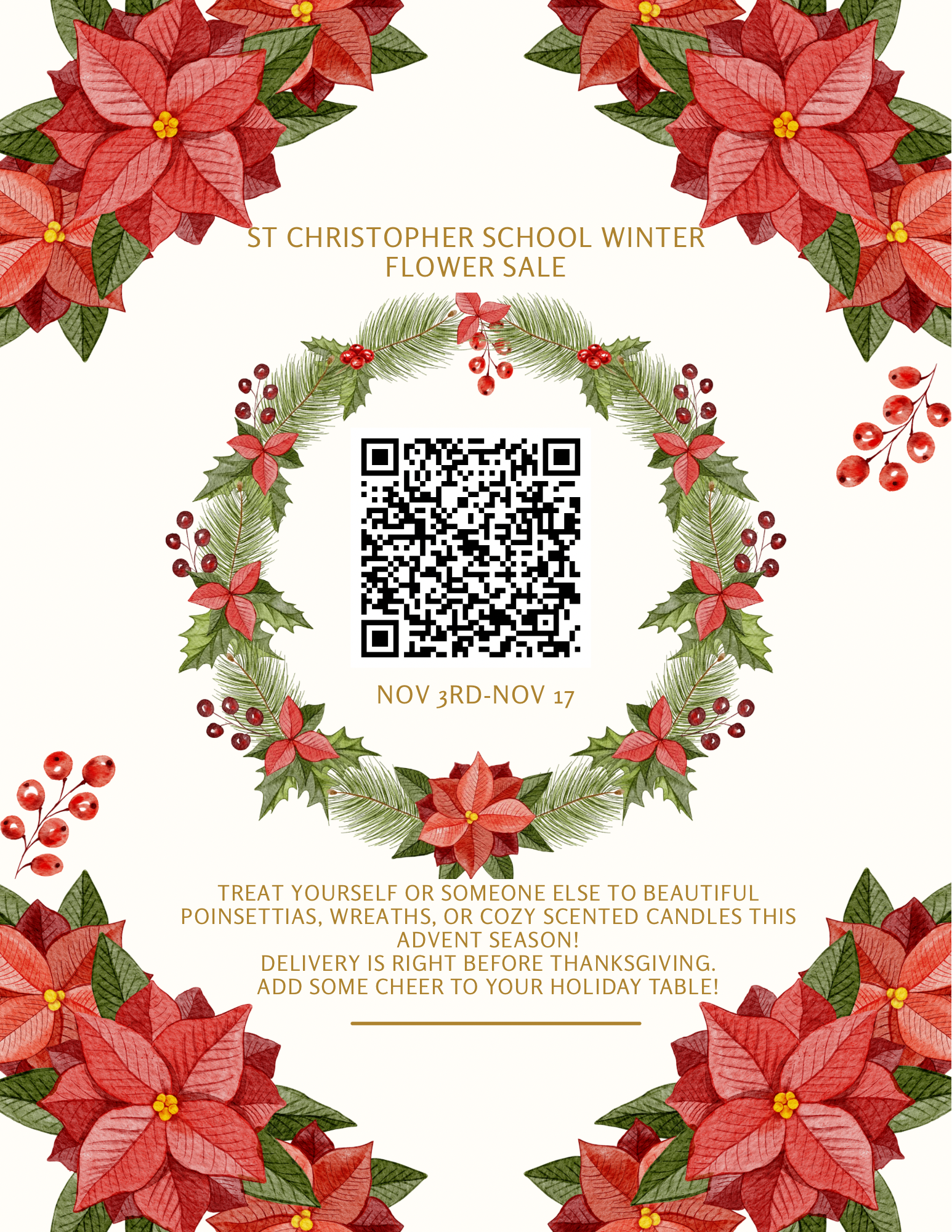
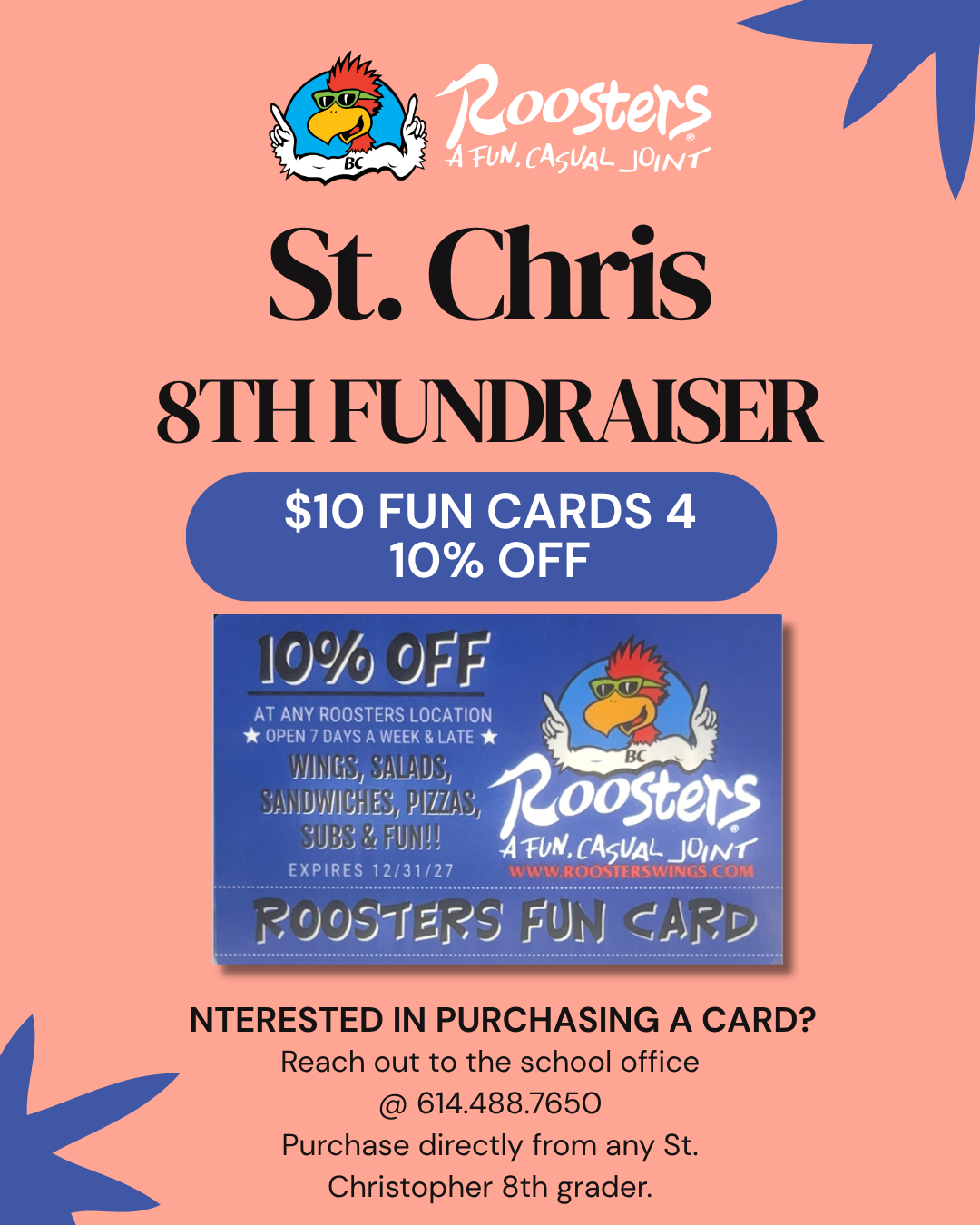
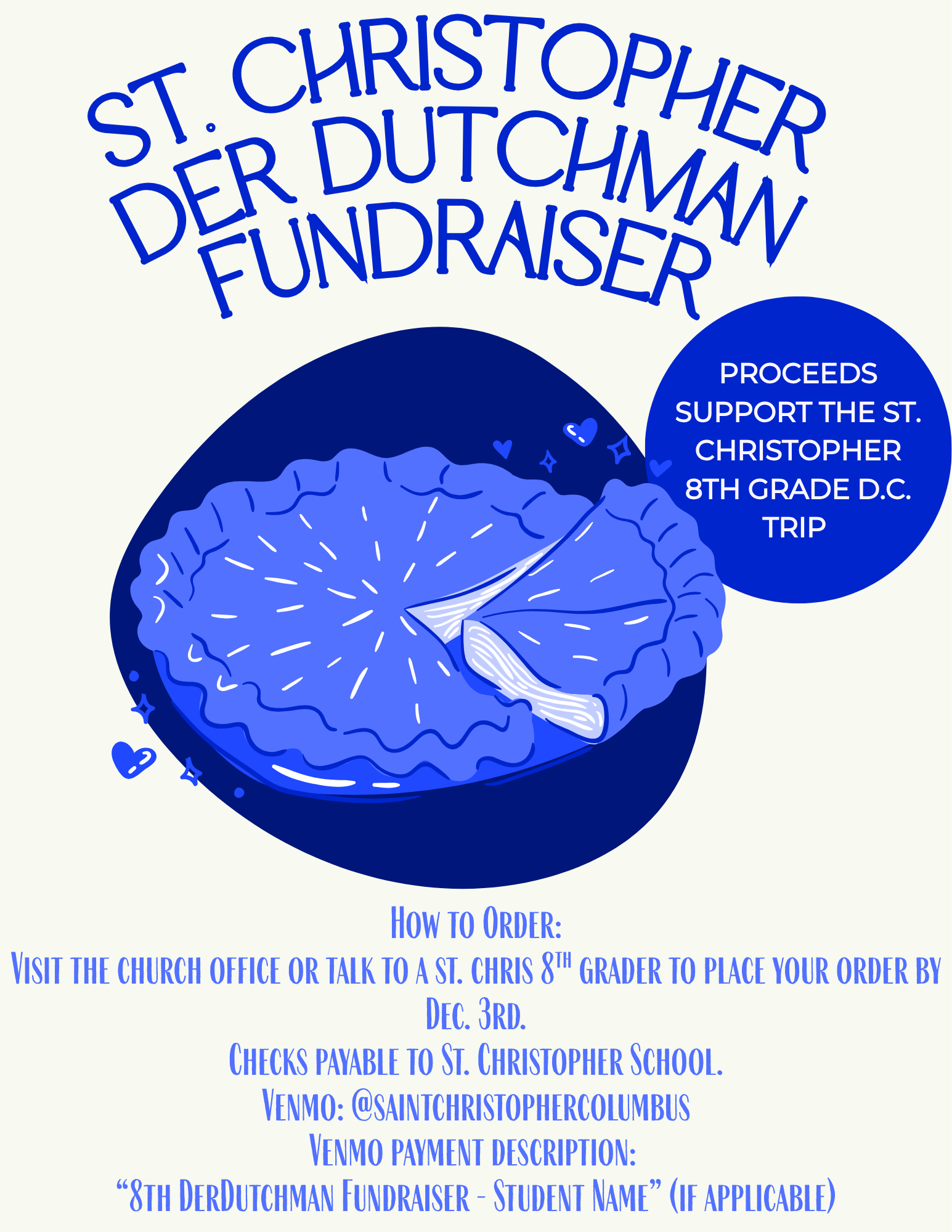
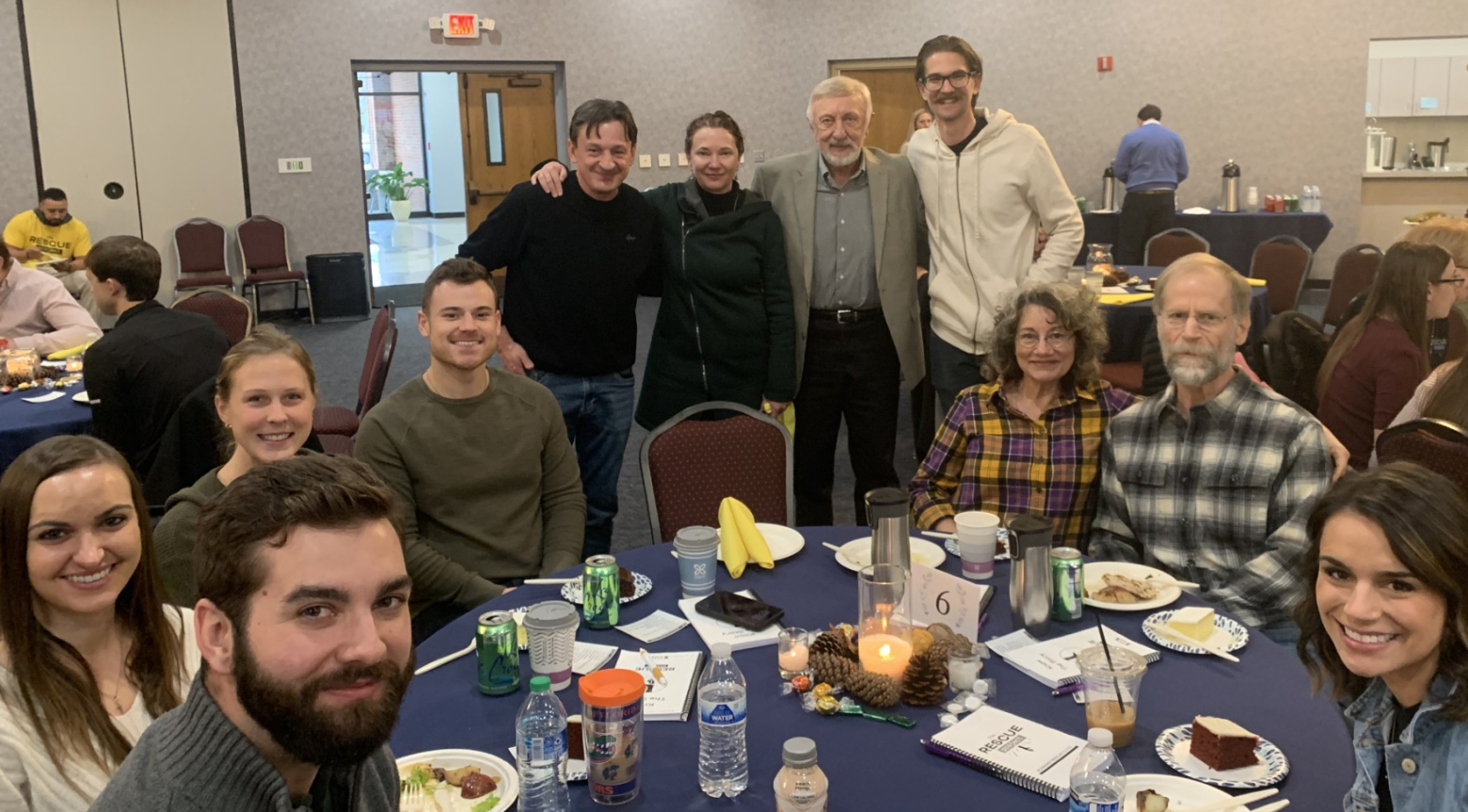
St. Christopher’s is excited to announce receipt of a grant from The Catholic Foundation generously supporting The Rescue Project! The Rescue Project is an engaging presentation of the Gospel message and will be available at St Christopher early next year. Stay tuned for details!